Process
It all begins with a grid
A flat sheet of paper, folded into a grid of precise, equal creases. Everything else grows from there.
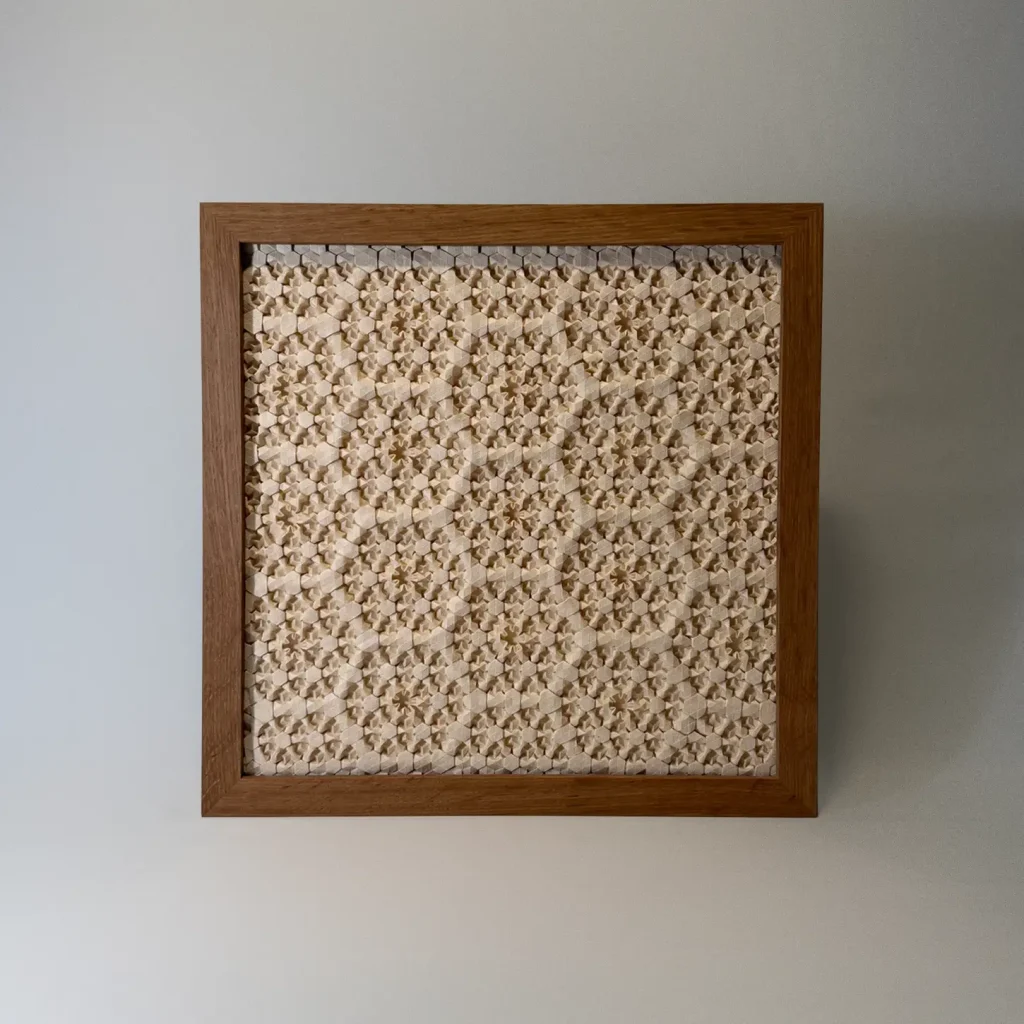
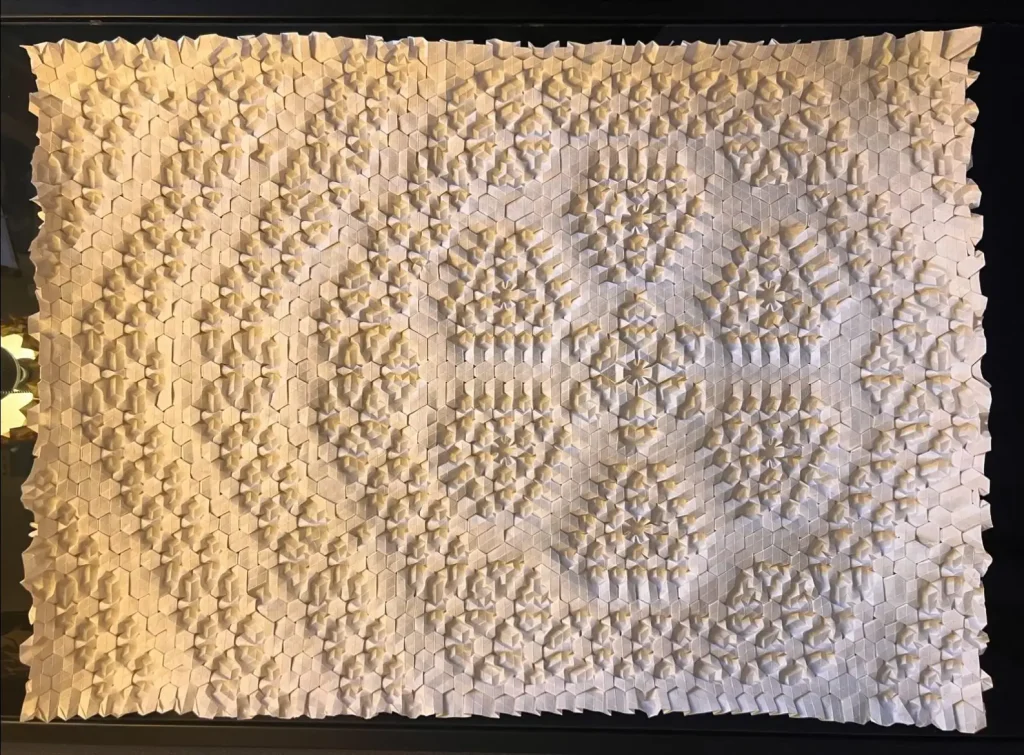
I generally work with one of two types of grids: a triangle grid and a square grid (though triangle grids are my favorite). The triangle grid is shown in the background of this page, and consists of a tessellated grid of identical equilateral triangles. This grid emphasizes triangular, hexagonal, and diamond shapes. I have found that the tessellations created on this grid allow for more natural patterns, something heavily emphasized in pieces such as “Dry Cleaning Only” and “Garden Path.”
Square grids consist of a tessellated grid of squares, with diagonal lines dividing these squares into right triangles. The square grid is shown in the background of the homepage of this site. This grid emphasizes sharp angles and squares, giving most patterns created on it a more ornate, structured feel. An example of this style can be seen on my “Cross Motif” lampshade, one of my earliest lampshade creations.
Each piece is built by folding the sheet in half, then in half again, so the divisions always come in powers of two: 16, 32, 64. The finer the grid, the more intricate the tessellation it can hold. Most of my standard pieces nowadays are created on a 128 division grid, which takes me just about a day and a half to create. Once I have a finished grid, I can begin the process of collapsing the paper down into a tessellation.
The more I folded and the more I studied other artists such as Michał Kosmulski, Joel Cooper, Shuzo Fujimoto, and Tomiko Fuse, the clearer it became that there is no end to how complex this art can get. That is what keeps me folding.